31/03/2016

ABOUT ME

This unit is for kids of the third year of primary school. It is about the English Language.

The use of the ICT in this work is indispensable because the main program they want to use is Scratch, a programming application that is being trendy amongst primary schools. It is quite complex but the benefits are really profitable: it develops many cognitive capacities of the children, beyond the work of the simple contents of the unit.


Here I attach you the tutorial of how Scratch works. Give it a glance, it is very interesting and usefull!

30/03/2016

HEALTHY HABITS

For the second year of primary, here we have a didactic unit that talks about the healthy habits, as well as the importance of the sport in our daily-live and health.


As you can see in the photos below, the most relevant activities in this unit are:
          
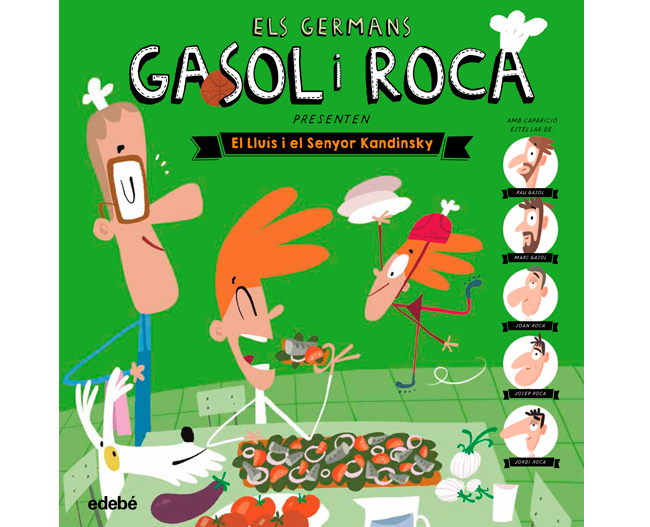
           On the one hand, they use as a theoretical support the digital book called "El lluís i el senyor Kandinsky", made by Gasol's brothers and Roca's brothers (famous Catalan basketball players and famous Catalan cookers).
I think this book can be very interesting to study this kind of contents. It's a very nice choice.

           On the other hand, they will work the food pyramid using a very dynamic methodology.


           And, finally, all the pupils of the class will go out of school and go to the market to put into practice all the theoretical knowledge they have been studying. They should have to do a budget with all the products they hypothetically have bought.


To sum up, I think this is a very interesting unit, but it only can be productive and available with more than one teacher.

For more information, here I attach you the link of the blog of the protagonist of this unit. Thank you Clàudia for your work! Claudia's blog

29/03/2016

Didactic Units!


We are at the end of the first part of Digital Literacy classes, with the subject I started this blog. I must say it has been a really good opportunity for me to face with that amount of digital tools, apps, programs, researchers, that  at the beginning scared me. Particularly, I am really proud of the final work we have done about didactic units.

As I explained you in older posts, we have created didactic units in groups of four people about different areas of the curriculum of early years and primary education with a relevant use of the new Technologies. They are extremely interesting and creative from an educational point of view.

Before I start showing them to you, just let me tell you that all the groups have been using most of the digital tools we have learned in class to do our project work. For instance, Google Hangouts, google drive, twitter, gmail, google calendar, and so on.

Now I am going to present you some of the projects our colleagues had been elaborating.

GEOMETRICAL SHAPES

This is the first didactic unit they have exposed. It's about mathematics for five-years-old children.


In this unit children will learn geometrical shapes with games and stories. Specifically, the robot game  (link) and a story created by the teachers. One of the most important applications for creating and illustrating stories for children is Storyjumper. Also, there is another that is Storybirds, but it doesn't let you too many freedom to create and innovate.

To fully incorporate ICT in the classroom, in this unit there will be some tablets for each group through which they can do the activities. According to the creators of the project, the use of ICT has to do with the fact that "the children have to connect with the real world and learn how to work in a more dynamic and motivating way."


Finally, an application that seemed more relevant and useful as an educational resource for teachers is: Nearpod. This is a program that facilitates the management of information you work with as the teacher receives directly what the child does via computer or other electronic device. It's an innovative and interactive classroom tool to create, engage and assess. An all-in-one solution for the use of devices in education!


27/03/2016

Aprenem amb les TIC


This post is going to be in Catalan, because most of the links that I am going to share and the resources to find the information are in this language. Moreover this is for a Catalan school with a Catalan curriculum and some aspects of it can not be translated properly. -Lola Ruiz-.


En primer lloc, i com ja he esmentat en altres posts, estem treballant en un projecte anomenat Treballem amb les Tic en el qual elaborem una unitat didàctica per a nens i nenes de segon de primària. L'àrea que es treballa és el cos humà, els sentits i els hàbits higiènics, tots ells dins l'àmbit del coneixement del mediLa unitat està programada per a nou sessions d'1 hora i mitja, en total 13 hores i mitja. A partir del currículum de primària establert pel Departament d'Ensenyament de la Generalitat de Catalunya, hem establert els nostres objectius, les competències a desenvolupar i els criteris d'avaluació de la unitat. 

Bé, feta aquesta breu introducció, em dirigeixo al bloc de la meva companya de treball, a la Lola Ruiz, ja que ella ha fet una molt bona explicació detallada i amena del que consisteix aquest projecte i com que és exactament el mateix que jo us volia escriure, no podria fer-ho de cap altra millor manera que plagiant el seu text. Entreu i visualitzeu el següent link: http://educatetoday1.blogspot.com.es/ 

Ara, doncs, us mostraré una petita pinzellada de les activitats que hem elaborat per a aquesta unitat, la metodologia que hem emprat i l'ús de les Tic que n'hem fet en aquesta unitat didàctica.

En primer lloc, partim de la base que aquests alumnes tenen un bloc creat de l'assignatura, el qual al llarg de totes aquestes sessions, cada dia un alumne ha de penjar una fotografia al blog relacionada amb el que s’ha treballat a l’aula. Els companys podran aportar comentaris: CONEIXEMENT DEL MEDI

Per a dur a terme la primera sessió, hem dissenyat un Dòmino amb peces gegants per tal de poder-hi jugar amb tot el grup classe. Aquest joc ens servirà per esbrinar els coneixements previs dels nostres alumnes i, a partir d'aquí, poder enfocar les següents sessions i també, montar grups heterogenis per a futures activitats en grup.


Tot seguit, en la mateixa sessió (i que serà el fil conductor de tota la unitat didàctica) presentarem un concurs online elaborat per nosaltres amb un programa anomenat Kahoot. En ell s'hi presentarà una curiositat que es plantejarà al final de cada sessió a partir de la qual els nens hauran de cercar informació per poder resoldre-la el següent dia.


Tenint en compte, sempre, l'ús imprescindible de les Tic, els alumnes (amb una tauleta digital cadascú) faràn la cerca a la classe i també a casa amb aquest o qualsevol d'altre aparell electrònic, i hauran de resoldre la curiositat en aquest concurs a través de la tauleta digital que tindràn a la classe.


D'altra banda, quan tractem el tema de les parts del cos humà, l'activitat innovadora que hem proposat és fer un moral (per grups) i, seguint tot el seu procés a través de fotos, elaborarem un video final amb el progarma Stopmotion.


En conclusió, creiem que hem aconseguit elaborar una unitat didàctica prou completa i complexa on l'ús de les TIC és indiscutible i les activitats són molt innovadores. Us animem a que li feu un cop d'ull a la graella que estarà penjada al blog de l'escola. 


16/03/2016

SOMEWHERE IN KENYA...


Hi everybody again!

These lasts two weeks I took a break from my daily-live routine and I travelled to a fantastic country, which I was expecting for years. All remains in Kenya, an overwhelming country of Africa. So, after these days without internet connection, I write you again to explain you one of the best experiences I have ever had. I am going to share with you some of the pictures I took there.

According to what Ernest Hemingway said about Africa, "I had not left yet, but I already missed it". This is known as the "illness of Africa". It affects to the travelers that keep fascinated upon the natural beauties of one of the most incredible biologic patrimonial of the world; Kenya. Myself, I am one of them.


Since I get on the plane and I took off in Nairobi, I kept absorbed for the attractiveness of the huge Savannah, full of wild animals; the amount of tribes and warring clans; the glamour of the sunsets and the turquoise induces water. Also the chaos and disorder that characterizes the capital. These images define a country: Kenya.


Kenya has exceeded the expected. The majesty of its National Parks and Reserves and, of course, of its people, has transmitted me the greatness of this country. I wasn't accommodated in a luxurious lodge and I didn't go to make the most expensive safari as it appears in the mythical novel Memories of Africa by Sydne Pollack. All the contrary, I was in touch with the autenticity of the real daily life of the people who lives there, those who fight for their survival, most of them only fight to see the following sunrise. 


As a future educator, one of the things that I really appreciated and loved from Kenia were the adorable kids and the amazing schools there were. I visited both private and governmental schools and the differences between them are unimaginable. This can be understood if we know that in Kenia the social classes are two: the rich ones and the extremely poor ones. So, in schools the difference also exist. It's quite disgusting to see this crude reality. I show you two pictures below so you are able to see if I am right or not... Do you see the chairs? the tables? the blackboard? the whole building? Let's think about it..


Not only the facilities and the material is absolutely different in both places, but also the way of teaching. For instance, in the private school, the teachers are more friendly and kind with their pupils than in the public one, in where students are shouted all the time by the teachers and even harmed with a wood stick. I get quite in shock when I saw it.

All in all, Kenya is a trip where the adventure is always possible. There exist as many Africa's as you want to believe. I strongly recommend you to make a trip like this, even as an educator, the way you see education changes after spending some time in a country like this. It's worth!

01/03/2016

Work collaboratively in a way never possible before!


Until now, we have been working how to search information, how to organize it, but these week we have learned how we manage it. If you keep reading you will find some relevant information.


Working in groups has never been as comfortable and complete as now is.  Thanks to useful features of Google + such as: HANGOUTS, GOOGLE DRIVE and GOOGLE CALENDAR; you can organize and make your project works in a way never possible before.


To start, let me tell you we are working on a project called “Go for it” in our Digital Literacy subject, which is a hypothetical didactic unit of science for students in the second year of primary school. I will talk about it in future posts. It’s is about the human body, the five senses and also the hygienic habits. We are a group of four students that we are working together on that project and we are using all the features that Google + offers us. I really recommend you to use them, because it facilitates a lot our work!


         On the one hand, with the tool called Hangouts you can easily send and receive messages or just simply make a video call to anybody.  It’s a powerful tool for making connections and working collaboratively. Many educators have embraced Hangouts to enrich both their students’ learning experiences and their own professional development.

         Here you have some ideas from teachers who are using it in classroom: from a virtual book club (classes that are reading the same book or similar genres can discuss novels together and recommend books to one another); rethink student presentations (What better way to make learning real and relevant than to have students share their work with adults who can provide constructive feedback at the end of the presentation?) ; Invite guest speakers (Video-calling enables anyone from around the world to “visit” a school); Collaborate with your PLN (With everyone just a video call away, educators can work on projects and share ideas with anyone around the world), and so on.


The possibilities of using Hangouts in education are endless. How will you transform your learning and the learning of your students? 
(If you are interested about google hangouts and its functioning, just take a glance in this link http://hobbytohot.com/intro-google-hangouts/ )
       On the other hand, with Google Calendar not only can you organize and plan your work, but also share it with all the members you are working with.  This is a very useful tool to keep in touch with all the dates of the project. In our project, for instance, we have the calendar shared with all the four members and we have an alarm that advises us when is the limit date to have finished a part of the project.

         Finally, there is Google Drive, an unlimited potency. This is the feature that lets users upload documents, images, spreadsheets and more has millions of neat little ways to boost your everyday activity. It's also a useful online warehouse that holds all the things you don't have space for on your computer. You can have the documents in  a private way or share them with other members. Google Drive offers you a calcul document, a writting document, some programes to make surveys or graphics...but the one we use the most is the writting document. It's benefits are unbelievable.